
Introduction
If you’re looking at flagship all-in-one DJ systems, you’ve probably narrowed it down to these two: the Denon DJ Prime 4 and the Pioneer XDJ-XZ. Both are serious pieces of hardware for mobile DJs, club installs, and hobbyists who want a consolidated setup without giving up performance. The Denon DJ Prime 4 vs Pioneer XDJ-XZ choice isn’t just about specsâit’s about how you prefer to work, which ecosystem you’re okay with, and what your actual gigs look like.
I’ve spent a lot of hours on both. Wedding booths, club residencies, the whole range. This isn’t about picking a winner. It’s a practical breakdown so you can figure out which one fits your style, your file management habits, and your future needs. We’ll cover standalone operation, screen workflows, build quality, and the less obvious costs of each path. Let’s get into it.
At a Glance: Key Specs Comparison
| Specification | Denon DJ Prime 4 | Pioneer XDJ-XZ |
|---|---|---|
| Channels (Standalone) | 4 | 2 (4 with laptop) |
| Screen Type | Dual 7-inch touchscreens | Single 7-inch non-touch |
| Standalone Software | Engine OS | rekordbox (partial) |
| Supported Formats | Engine OS, Serato (full), Virtual DJ | rekordbox, Serato (unlock) |
| Built-in Effects | Re-engineered FX (from Denon SC series) | rekordbox Beat FX, Color FX, Sound Color FX |
| Connectivity | XLR out, dual headphone, balanced booth, USB-B, 2x USB-A, Ethernet | XLR out, booth out, USB-B, 2x USB-A, Ethernet, mic inputs |
| Price Range (New) | ~$2,000 â $2,200 | ~$2,500 â $2,800 |
| Weight | 24 lbs (10.9 kg) | 30 lbs (13.6 kg) |
That table gives you the basics. But how these numbers translate to a real gig is where things get interesting.
Build Quality and Portability
Pick either of these up and the first thing you notice is the weight. The XDJ-XZ is 30 pounds. Hauling that upstairs or in and out of a car trunk gets old fast. The Prime 4 is 24 pounds. Still not light, but that six-pound difference adds up at 2 AM after a long night.
Build-wise, both are solid. The XDJ-XZ feels a bit more industrial with its thicker metal frameâmakes sense given its club install roots. The jog wheels are full-size mechanical ones from the CDJ-2000NXS2, with that satisfying heft. The Prime 4’s jogs are good too, maybe a bit lighter, but responsive with a center screen. Some people say they feel a little plasticky, but mine have held up fine over hundreds of hours.
One minor thing on the Prime 4: the headphone cue buttons on some early units wobble a bit. Not a functional problem, but it doesn’t feel as premium as the XDJ-XZ’s switches. Heat is another factor. The XDJ-XZ runs cooler in a sealed booth. The Prime 4’s internal power supply gets warmer, so give it some breathing room if you’re stacking gear.
Display and Workflow Differences
This is where the two really split apart. The Prime 4 has dual 7-inch touchscreens. You can browse your library on one while mixing on the other. That’s huge for big libraries. Scroll through playlists, search tracks, look at waveformsâall without interrupting the current track. The touch response is fast. You can even tweak EQ and filters on screen if you want, though I usually don’t bother.
The XDJ-XZ has a single 7-inch display that doesn’t do touch. It’s the same screen from the XDJ-1000MK2 or XDJ-700. You use a rotary encoder and buttons to navigate. If you learned on CDJ-2000s, this feels natural. But if you’re used to the speed of a phone app or the Prime 4’s touch screen, it can feel slow. Browsing 10,000 tracks on the XDJ-XZ means a lot of scrolling. The waveform is also smaller and less detailed.
If you pick tracks on the flyâespecially for open-format gigsâthe Prime 4’s dual screens save real time. If your sets are more planned out or you mostly play from a smaller folder, the XDJ-XZ’s single screen works fine.
Standalone Performance and Format Support
Here’s the biggest misunderstanding with the XDJ-XZ: it’s not a true 4-channel standalone unit. Without a laptop, you get two full channels plus two that only take external line or phono inputs. To use four channels standalone, you need a laptop running rekordbox as a sound source. That’s a deal-breaker for some mobile DJs.
The Prime 4 gives you four fully independent standalone channels right out of the box. Mix four decks from USB drives using Engine OS. No laptop needed. That’s a real advantage for mobile gigs, weddings, or any situation where you want less gear and faster setup.
Format support is another difference. Engine OS handles FLAC, ALAC, AIFF, all at high bitrates. It also does stem separation built-in. The XDJ-XZ is built around rekordbox for library management. Rekordbox now supports FLAC, but some older hardware still has issues. If your library is a mix of formats, the Prime 4 is more flexible. If you live in rekordbox with a well-organized library, the XDJ-XZ is seamless.
Effects and Sound Quality
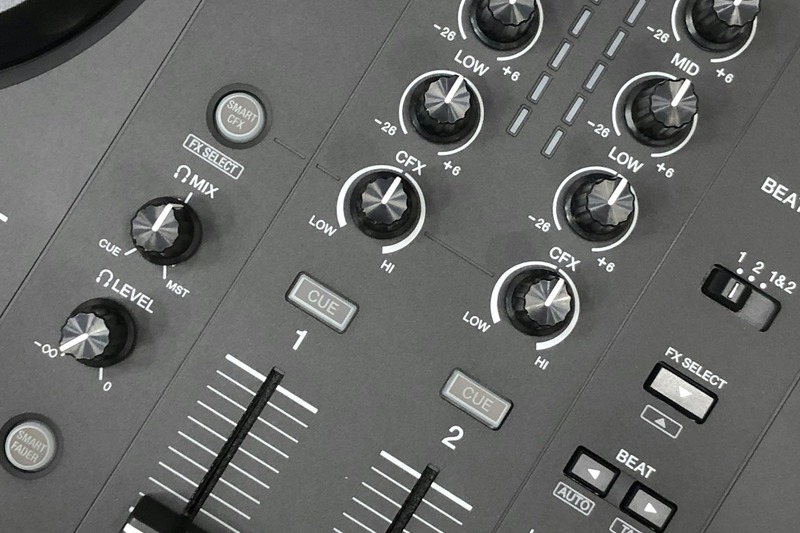
The effects on both are good, but they have different flavors. The Prime 4 uses a reworked effects engine from the Denon SC series. The echo, delay, and reverb sound lush and musical. The beat-echo is especially cleanâit doesn’t muddy up the mix. The XDJ-XZ uses rekordbox’s Beat FX and Color FX. The Beat FX range is wide, with creative options like Auto Pan and Slicer. The Sound Color FX (Filter, Noise) are useful, but they can sound a bit digital compared to the Prime 4’s warmer feel.
Sound quality overall: the XDJ-XZ has a slightly cleaner output for club PA systems. The Prime 4’s sound card is fine for mobile setups and most clubs, but on a high-end system with a picky engineer, you might notice a busier low-mid range. For mobile gigs, both are excellent.
One practical thing: headphone cueing is more straightforward on the XDJ-XZ. Some people find the Prime 4’s split cue mode a little finicky. Not a deal-breaker, but worth practicing before a set.
The Ecosystem Lock-In Factor
This might be the most important thing to think about for the long term. The XDJ-XZ keeps you in the rekordbox world. You need a rekordbox subscription to manage your library, export playlists to USB, and unlock Serato support. The hardware itself can play from USB drives without a subscription, but any library changes require the software. If you ever want to switch brands, you’re moving your whole libraryâand maybe paying for conversion tools. For those building a rekordbox mobile setup, picking up a reliable rekordbox USB drive is worth it for organizing playlists.
The Prime 4 runs Engine OS, a standalone operating system. You can manage your library right on the unit or use the free Engine DJ software on your computer. No subscription. That makes the Prime 4 much more flexible. You can also switch to Virtual DJ or Serato without any penalty.
If you play clubs on CDJs every week, the XDJ-XZ’s rekordbox workflow is the same as what’s in the booth. That consistency is a real plus. If you’re a mobile or multi-format DJ, the Prime 4’s freedom saves time and money.
A Common Setup Mistake: Overlooking Cabling and Case
I see this all the time on forums: someone drops $2,500 on an XDJ-XZ and shows up to a gig with a cheap folding table and a mess of unlabeled cables. Don’t be that person. Both units need a good power cable (spares are a good idea), quality RCA or XLR cables for outputs, and USB drives formatted correctly (FAT32 for both, exFAT for bigger drives on the Prime 4).
For mobile work, get a solid flight case. Traveling DJs who need to protect their gear will appreciate a Denon DJ Prime 4 flight case or XDJ-XZ flight case for protection against bumps and spills. Also grab some reliable XLR cables and a USB drive organizer. These small things make a big difference in reliability.
What the Hype Gets Wrong
Let’s clear up a few common myths.
Myth #1: The XDJ-XZ is a true 4-channel standalone. No. It’s 2-channel standalone plus two line/phono inputs. That’s not the same. If you need four independent USB channels without a laptop, the Prime 4 is your only option.
Myth #2: The Prime 4’s stem separation is perfect. It’s good, but not flawless. On clean tracks, the acapella extraction is impressive. On dense mixes with lots of reverb or overlapping vocals, you’ll get artifacts. Use it as a creative tool, not a crutch.
Myth #3: The XDJ-XZ is outdated. Not really. It’s a mature product with a proven ecosystem. The hardware is solid, and rekordbox is still the club standard. It just doesn’t have some of the modern features the Prime 4 offers, like touchscreens and true 4-channel standalone.
These realities matter for your choice. Don’t get caught up in YouTube hype or forum groupthink. Think about your actual gigs.
Best for Mobile DJs vs Club Setup
Best for Mobile/Flexible DJs: Denon DJ Prime 4. If you do weddings, corporate events, or open-format clubs, the Prime 4’s true 4-channel standalone, dual screens, and format flexibility are hard to beat. You can set up quickly, carry it in one trip, and handle any format. The learning curve is steeper if you’re coming from Pioneer, but it pays off. A dedicated Denon DJ Prime 4 case is a practical addition.
Best for Club Residents or Brand-Conscious DJs: Pioneer XDJ-XZ. If you’re a club resident or regularly play on CDJs, the XDJ-XZ’s workflow is identical. Resale value holds up better, and promoters are happy to see Pioneer gear in the booth. The tradeoff is losing two standalone channels and being locked into rekordbox.
For hybrid DJsâthose who play clubs and mobile gigsâthe Prime 4 is more versatile, but you’ll need to learn a different workflow for club booths. The XDJ-XZ is a club booth in a box, great for practice but less practical for mobile flexibility.
Price and Resale Value Considerations
Street prices for the Prime 4 are around $2,000-$2,200 new. The XDJ-XZ sits at $2,500-$2,800. The XDJ-XZ commands a premium because of brand recognition and Pioneer’s massive club install base. On the used market, the XDJ-XZ holds about 70-75% of its value after 2-3 years, while the Prime 4 holds about 60-65%. That’s partly due to demand and partly because Pioneer upgrades tend to come slowly.
Total cost of ownership includes potential extras. You might want a laptop stand for the XDJ-XZ if you use it with a computer, or a turntable for vinyl. The Prime 4 has more built-in features (dual screens, USB hub for two drives), so you might need fewer accessories out of the box.
Audio Interface and Recording Options
Both units can record internally to a USB drive. The Prime 4 records in lossless WAV up to 48kHz/24-bit. The XDJ-XZ also records in WAV, but only at 44.1kHz/16-bit. That matters if you’re recording mixes for release or podcasting. The Prime 4’s higher quality gives you more room for post-processing.
For multitrack recording, you’ll need external gear for either. Neither does multitrack USB out of the boxâboth give you a stereo mix unless you use an external interface. For podcasters or mobile DJs who record sets for promotion, the Prime 4’s better internal recording is a small but real advantage.
Final Verdict: Which Should You Buy?
There’s no single right answer. It depends on what you actually do.
Buy the Denon DJ Prime 4 if:
- You do mobile gigs (weddings, corporate, open-format)
- You need 4-channel standalone without a laptop
- You want dual touchscreens for faster browsing
- You value format flexibility and ecosystem freedom
- You want to save about $500 up front
Buy the Pioneer XDJ-XZ if:
- You’re a club resident or regularly play on CDJs
- You prefer the club-standard rekordbox workflow
- You want higher resale value and brand recognition
- You need a robust unit for a fixed booth with minimal moving
- You’re okay with 2-channel standalone or using a laptop
If you’re still unsure, think about your next three gigs. Are you hauling gear into a car trunk, or walking into a booth that’s already wired? That will point you in the right direction.
For those ready to buy, you can check the current price of the Denon DJ Prime 4 on Amazon or check the current price of the Pioneer XDJ-XZ on Amazon.