Introduction
You can build a solid following online, release tracks that get decent streaming numbers, and even land sync placements without ever leaving your studio. But if you want to accelerate your career in a real way—find collaborators who push your sound forward, connect with labels that actually listen to new material, or learn production tricks that no YouTube tutorial covers—you still need to show up in person. That’s why knowing how to network at music conferences festivals is a practical skill every serious producer and artist should develop. This article breaks down the strategy, the gear, the conversation techniques, and the follow-up process you need to make those events work for you.
Why Networking at Music Conferences and Festivals Still Matters
We live in an era where you can direct message almost anyone. You can tag a producer on Instagram, send a beat to an A&R email address, or slide into a label’s DMs. The problem is everyone else can too. The signal-to-noise ratio is brutal. A face-to-face meeting cuts through that noise instantly.
When you meet someone in person, they remember you differently. You’re not just another link in an inbox. You’re the person they had a real conversation with at the bar after a panel discussion on mixing. You’re the person who asked a smart question at a workshop. That memory is sticky in ways a cold email never is.
Beyond the personal connection, there’s the information exchange. Conferences and festivals concentrate a huge amount of industry knowledge in one place. You’ll hear engineers talk about gain staging techniques you’ve never tried. You’ll overhear conversations about which plug-in bundles are actually worth the money. You’ll get tips on negotiation, publishing, and distribution that aren’t written down anywhere.
And then there are the collaborations. I’ve seen two producers who live on different continents meet at a festival and end up working on a track together that got picked up by a major playlist. That doesn’t happen through Instagram DMs nearly as often. There’s a chemistry to working together in the same room that you can’t replicate over a file transfer.
Digital networking is fine for maintenance. In-person networking is where you plant the seeds for real career moves.
Before You Go: Setting Networking Goals
Walking into a conference with 5,000 attendees and a vague idea that you want to —meet people— is a recipe for wasted time. You’ll end up talking to whoever happens to be next to you at the coffee station. That might work, but you’re leaving too much to chance.
Set concrete, specific goals before you buy your badge. Don’t make them about outcome—you can’t control whether a label signs you or a producer agrees to a collaboration. Make them about action.
Here’s an example of what good goals look like for a producer attending Winter Music Conference:
- Have a conversation with at least three mastering engineers about their chain.
- Exchange contact info with two artists whose work you genuinely respect.
- Attend two workshops on mixing and ask one question per session.
- Identify one potential mentor and ask them a single thoughtful question after their panel.
That’s specific. It’s measurable. And it doesn’t depend on anyone else giving you something. You control the actions.
Take it a step further: write down your goals on a note card and put it in your wallet or phone case. When you feel lost or overwhelmed, pull it out and remind yourself what you’re there to do. It keeps you focused when the noise gets loud.
Also, be realistic about your energy. If you’re an introvert—and many producers are—don’t set a goal of meeting fifty people. Set a goal of three excellent conversations. Quality over quantity is the rule here.
What to Bring: Essential Gear for Networking
Packing for a networking event is different from packing for a performance. You’re not hauling an interface, a laptop, and a MIDI controller. You’re carrying a light, focused kit that keeps you prepared and professional.
Business cards with a QR code. Yes, business cards are still relevant in this industry. Even better if you include a QR code that links directly to a playlist of your best work or a SoundCloud profile. It’s faster than typing a URL. Make sure the card is clean—your name, your role (producer, engineer, artist), your website, and the QR code. Keep it simple. You can also use a digital business card service linked to your phone’s NFC chip, but I still carry physical cards as a backup because batteries die and signals drop. Travelers who frequently attend multiple events may find it helpful to have a dedicated set of premium business cards with QR codes that link directly to your portfolio.
A portable charger. Your phone is your primary tool for sharing links, taking notes, and scanning badges. If it dies, you’re dead in the water. Don’t rely on finding an outlet or borrowing a charge. Bring a high-capacity power bank. Frequent event-goers often prefer a slim 20,000 mAh power bank like the Anker PowerCore 26800. It’ll charge my phone three or four times over a full festival day.
A small field recorder. This might sound old-school, but hear me out. You’re going to hear ideas, techniques, and advice that you want to remember. Writing it down takes too long. Recording a voice memo on your phone works, but your phone is also your camera, your social media hub, and your messaging tool. A dedicated field recorder like the Zoom H1n is small, has great battery life, and captures clear audio for quick notes. Label the file with the person’s name and a keyword. It’s invaluable for follow-up later.
A small notebook and pen. Not everything should be digital. Sometimes the best connections happen in places where pulling out your phone feels rude or awkward. A pocket-sized Moleskine and a reliable pen let you jot down a detail about someone without looking like you’re scrolling Instagram. It also signals that you’re paying attention. For producers who prefer analog note-taking, a Moleskine Cahier Pocket Notebook is durable and affordable.
Comfortable shoes. This isn’t gear you buy at a music store, but it’s the most important item on this list. You will walk miles inside convention centers and festival grounds. Blisters kill focus. Wear shoes you’ve broken in.
Keep all of this in a lightweight, cross-body bag or a small backpack. You want your hands free and your weight evenly distributed.
Where to Network: Beyond the Main Stage
The main stage performances are fun, but they are the worst place to network. The music is loud, nobody wants to talk, and everyone’s staring at the performer. If you want to make connections, go where the talking happens.
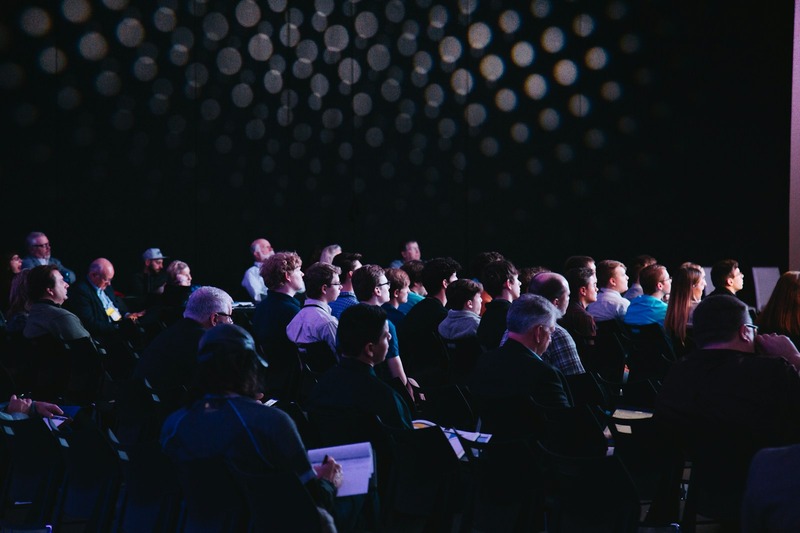
Workshops and panels. This is the highest-value networking zone at any conference. The room is quieter. People are seated. There’s a shared focus on the content. After the session ends, stick around. Approach someone who asked a good question or made a relevant comment. Your opening line is easy: —That question you asked about parallel compression was exactly what I’ve been struggling with. How did you figure that out?— You’ve shown you were paying attention and invited them to share expertise.
Sponsor booths. Companies send their best people to these events. The reps at a plug-in booth or a hardware manufacturer’s table are often engineers and product specialists who know their stuff. They’re paid to talk to you. Use that. Ask genuine questions about the gear or software. If you hit it off, ask if they’re attending any after-parties or dinners later. The transition from booth conversation to personal connection happens naturally if you stay curious.
After-parties and lounge areas. This is where the formal event structure breaks down and real relationships form. The volume is lower, the drinks are flowing, and people are relaxed. The key is to not force it. Stand near the edge of a small group, listen for a moment, and find an opening to contribute something relevant. If you overhear someone talking about their DAW workflow, you’ve got a ticket into that conversation. —Are you on Ableton or Logic? I’ve been trying to figure out the best way to route sidechain compression in 12.—
Lobbies and hallways. The space between sessions is prime real estate. People are walking from one room to another. They’re in transition mode, which means they’re open to quick, low-stakes conversations. A simple —Hey, how was the mastering panel? I had a conflict and couldn’t make it— can turn into a ten-minute exchange.
Avoid the temptation to post up at a table with a group of people you already know. You came to meet new people. That means being uncomfortable for a few minutes.
How to Start a Conversation Without Being Awkward
The hardest part for most producers and artists is the first thirty seconds. You’re standing near someone you want to talk to, and your brain goes blank. Here’s the fix: have a few scripts ready that are genuinely useful, not salesy.
The gear opener. If someone is wearing a T-shirt from a studio you recognize, or they have a piece of gear visible, use it. —Is that the new RME interface? How’s the latency?— It’s specific. It shows you know the gear. It invites a technical answer, which is comfortable for most producers.
The talk opener. Right after a workshop or panel, turn to someone near you and say, —I’ve been using that compression technique they just showed, but I’ve always struggled with the attack setting. What’s your take?— You’re not just asking; you’re sharing your own experience. That builds rapport quickly.
The lineup opener. If you’re at a festival and you both just watched a set, you have immediate common ground. —That kick drum sounded massive on this system. I wonder if they used a sine layer or just heavy saturation.— It’s a conversation starter that invites analysis, not small talk.
The single most important rule: listen more than you talk. The best networkers don’t pitch. They ask questions, listen carefully, and remember what the other person said. That’s the foundation for a follow-up that actually means something.
If the conversation stalls, don’t panic. A simple —Well, I won’t keep you—it was great talking to you— with a genuine smile closes it gracefully. Exchange contact info if it felt natural. If not, no harm done.
Common Networking Mistakes to Avoid
I’ve watched smart, talented producers sabotage their connections with a few consistent mistakes. Here’s what to avoid.
Handing out cards like candy. A business card given without context is trash. It gets lost in a pile or thrown away. Only give your card after you’ve had a real exchange. And even then, ask if they’d like it. —Can I give you my card? I’d love to send you that track we talked about.— That’s permission-based. It works.
Interrupting. In a loud environment, it’s tempting to jump in when there’s a pause. Resist it. Let people finish their thought. Interrupting signals that you value your own words more than theirs. It kills trust.
Staying in your comfort zone. It’s easy to find the two or three people you already know and hang with them all weekend. You’ll feel safe, but you’ll leave with zero new connections. Force yourself to break away. Go to a session where you don’t know anyone. Stand in a line and talk to the person behind you.
Overselling yourself. Nobody believes the person who says they’re —about to blow up.— Let your work speak for itself. If someone asks what you do, give a short, honest answer: —I produce electronic music, mostly ambient and downtempo. I’m working on an EP right now.— That’s enough. If they’re interested, they’ll ask more.
Not following up. This is the biggest mistake of all. You can do everything right at the event, but if you never send that follow-up message, the connection dies. More on that next.
The Art of the Follow-Up: Making the Connection Stick
The real work of networking starts after the badge is off. You’ve got 48 hours after the event ends to solidify the connection. After that, your memory of the conversation fades, and theirs fades too.
Send a follow-up message within that window. If you exchanged business cards or DMs, send an email or direct message. Keep it short and specific to what you discussed.
Here’s a template that works:
Subject: Great meeting you at ADE
Hey [Name],
It was great talking to you about the [specific thing you discussed—sidechain compression, a plug-in, a track, etc.]. I really appreciated your take on [specific point].
As promised, here’s a link to that track I mentioned: [link]. Would love to hear your thoughts if you have a moment.
Hope the rest of the conference treated you well. Let’s stay in touch.
— [Your Name]
Short, specific, and value-giving. You’ve referenced the conversation, shared something useful, and kept it low pressure.
For serious networkers who go to multiple events per year, it’s worth considering a simple CRM tool. Nothing fancy—just a spreadsheet or a dedicated app like CRM for Artists (search for options on Amazon or your app store). Track the event, the person’s name, what you discussed, and when you followed up. That turns random connections into an organized network you can tap into years later.
Networking Online Before and After the Event
Networking at the event is critical, but the surrounding online activity matters a lot too.
Before the event: Find out which hashtags the conference or festival is using. On Twitter/X, search for the event hashtag in the weeks leading up to it. Follow accounts that are posting about it. Engage with their content. Reply to questions you have answers for. This puts you on their radar before you ever arrive. When you meet them in person, you can say, —Hey, I saw your post about the mixing panel. Your take on multiband compression was helpful.— That’s instant legitimacy.
Discord is another powerful pre-event tool. Many conferences have official or semi-official Discord servers. Join them. Introduce yourself in the appropriate channel. Ask questions about the event. You’ll often connect with other attendees who are also looking for networking buddies.
After the event: Continue the online conversation. Share photos or insights from the event on your social channels. Tag the people you met (with their permission). Write a short LinkedIn post or tweet about the best thing you learned at a specific workshop. That keeps the connection warm and shows you’re still engaged.
Don’t be that person who only connects when they need something. Maintain the relationship with occasional, value-add interactions. A comment on their latest release. A share of a useful article. Small acts of generosity build long-term trust.
Realistic Expectations: What Networking Can and Can’t Do
Let’s be straight with each other. Networking will not turn a mediocre track into a hit. It will not replace years of dedicated practice in your DAW. It will not make a label sign you if your production quality isn’t there yet.
What networking does is open doors. It puts you in a position where your music actually gets heard by the right people. It gives you access to knowledge that speeds up your learning curve. It builds a support system of peers who keep you accountable and inspired.
The timeline is also longer than most people want to admit. You might meet someone at a conference and not see a tangible result for six months or a year. The collaboration might happen two events later. The label interest might come from a conversation they had with someone else about you. It’s a long game.
Don’t go in with a transactional mindset. —What can this person do for me?— is a losing approach. Instead, ask —What can I learn from this person?— or —How can I be useful to them?— That shift in perspective makes you a person people want to connect with.
Best Conferences and Festivals for Networking
Not all events are equal for networking. Here are a few that consistently deliver high-quality opportunities:
NAMM (Anaheim, CA): The National Association of Music Merchants show is huge. It’s gear-focused, which means you’ll find engineers, producers, and product developers who love talking shop. The convention center floor is massive, but the real networking happens at the hotel bars and after-parties.
SXSW (Austin, TX): South by Southwest is more broad, with film and tech components, but the music track is strong. The sheer volume of industry people makes it a great place to practice your networking. You’ll find panels on everything from mixing to sync licensing.
ADE (Amsterdam): Amsterdam Dance Event is the electronic music giant. It’s five days of conferences, showcases, and club nights. The networking density is extremely high. If you’re in electronic music, this is a must-attend.
Winter Music Conference (Miami, FL): WMC has been around for decades. It’s less formal than NAMM and more club-oriented. The daytime panels are where the serious networking happens. The nights are for socializing, but the connections made during the day are what last.
Pick one event that aligns with your genre and career stage. Attend it with a plan. Repeat the process. Over time, you’ll build a network that compoundingly creates opportunities.
Final Checklist for Your Next Event
- Set 2–3 specific, action-based goals. Write them down.
- Pack business cards, a portable charger, a field recorder, a notebook, and comfortable shoes.
- Review the schedule and identify 3–4 workshops or panels you’ll attend.
- Join the event’s online channels (hashtags, Discord, etc.) one week before.
- Use the opener scripts: gear, talk, or lineup-based.
- Listen 70% of the time, talk 30%.
- Exchange contact info only after a real conversation.
- Follow up within 48 hours with a specific, low-pressure message.
- Log your connections in a CRM or spreadsheet.
Frequently Asked Questions
What if I’m shy and hate approaching strangers?
Start small. Approach someone at a booth where they’re paid to talk. Ask a question about a product. That’s low stakes. Then graduate to a post-workshop conversation. You don’t have to be the loudest person in the room. You just have to be genuine and curious.
Can I network without a badge at a festival?
Yes. Many festivals have free satellite events, like panels at local bars, listening parties, or label showcases. Check the event’s social media for unofficial meetups. You can also hang out near the registration area or in the hotel lobby where attendees stay. It’s not ideal, but it works.
Is it worth bringing a demo CD or flash drive?
Generally, no. Most people won’t take physical media from a stranger. It feels pushy. Instead, have a digital link ready—a private SoundCloud playlist or a Google Drive folder. If the conversation goes well and someone asks to hear your work, you can share it instantly via text or email.
How do I network as an introvert without burning out?
Schedule breaks. Go back to your hotel room for thirty minutes to decompress. Set a realistic goal of one or two meaningful conversations per day. Focus on depth, not quantity. And remember that many successful producers and engineers are introverts. You don’t need to be an extrovert to be good at networking. You just need to be prepared and listen well.
Get Out There and Make Connections
Networking at music conferences and festivals is a skill, not a personality trait. It can be learned, practiced, and refined. Start small. Go to one event with a clear plan. Pack the right gear. Use the scripts. Follow up. Do that a few times, and you’ll build a network that outlasts any playlist or algorithm change. The doors are there. Walk through them.
Now, go make some noise.