
Introduction: Why Preparation Defines a Great B2B Set
Watching two DJs trade tracks can be magical when it clicks. But those seamless moments aren’t luck. They come from deliberate advance work. A B2B (back-to-back) set at a festival introduces dynamics that solo sets never touch—shared track selection, split control over energy, and constant real-time adjustments between two people who likely have different instincts.
If you want to properly prepare for a B2B DJ set at a festival, technical mixing skills aren’t enough. You need a logistical and interpersonal game plan. This guide walks through the practical steps to ensure your B2B slot sounds intentional, not chaotic. It’s written for DJs who treat festival slots seriously and want to deliver a set that feels like a unified performance, not two separate DJs fighting for the same airspace.
Why B2B Sets Are Different from Solo Sets
A solo set gives you full control over track ordering, phrasing, energy peaks, and recoveries. Every mistake is yours to own. Every victory is yours alone. A B2B set strips that autonomy away. Suddenly you’re sharing the decks with another DJ, and that means sharing responsibility for the crowd’s experience.
The unique challenges of B2B mixing
Shared control is the most obvious difference. You can’t predict exactly what your partner will play next, which makes phrasing less predictable and risk management more complex. Communication becomes as important as track selection. You need signals that work over booth monitor bleed, with a crowd noise floor, often under time pressure.
There’s also the interpersonal layer. Egos can surface when one DJ tries to dominate track count or energy direction. That kills a B2B faster than any technical mistake. The best B2B sets happen when both DJs genuinely listen to each other and prioritize the overall flow over individual spotlight moments. Understanding these dynamics early is the first step in learning how to prepare for a B2B DJ set at a festival effectively.
Step 1: Have the Pre-Talk Before the Festival
Skipping a pre-festival conversation with your B2B partner is the single most common mistake I see. You don’t need to script every song, but you absolutely need alignment on the broader plan.
What to cover in your pre-talk
Musical direction. Are you both planning to play in the same genre, or is there a crossover approach you want to explore? If you play techno and your partner favors house, you need to decide where the set will sit musically before you load your USB sticks.
Energy levels. Agree on the opening energy. Are you starting deep and building slowly, or jumping in at a mid-high energy point? The crowd’s arrival time and the festival’s day-slot matters here.
Track selection strategy. Some DJs prefer to play specific tracks they’ve curated together. Others want to keep a free-form approach where either can play anything. Either works, but you need alignment so you’re not both fishing through 1000 tracks while the first tune is ending.
Signals at transitions. How will you indicate you’re done and want to hand over? A head nod, a tap on the shoulder, or a visual cue on the booth screen. Standardize this before you go live.
Backup plans. What happens if the crowd isn’t reacting? Or if one of you runs out of energy halfway through? Discuss how to share the microphone (if needed) and who closes the set. This conversation alone will prevent most stage friction.
Step 2: Sort Out Your Shared Crate or Folder
The most technically practical part of B2B preparation is music sharing. If both DJs walk in with completely separate libraries, you’re gambling with phrase compatibility and key matching. The solution is a shared curation process.
Options for sharing music
Shared USB drive. Create one USB with two folders: one for DJ A’s selected tracks, another for DJ B’s. At the gig, you can load both folders into one player and swap between them. This works well on CDJs and keeps everything in one physical device. For DJs who need a reliable, high-speed option, a USB 3.0 drive with plenty of storage is a sensible choice.
Dropbox folder or Google Drive. Before the festival, both DJs upload a limited selection of tracks—say 40–60 each—into a shared folder. Both download everything and create a single rekordbox or Serato playlist labeled —B2B [Festival Name].— This gives you a unified library sorted by BPM and key.
Rekordbox playlists. If you both use rekordbox, export a shared playlist and copy it to each USB. Ensure BPM ranges and key information are visible for quick searching under pressure.
A USB switcher is a smart hardware tool to bring. It lets you toggle between two USBs on the same player without physically swapping media, which is useful when each DJ wants to use their own library.
Step 3: Agree on Gear and Setup
Festival booths vary—a lot. The mixer might be an Allen & Heath, a Pioneer DJM, or (rarely) something less common. Headphone layouts, cue buttons, and effects sections differ. Discussing gear in advance avoids awkward fumbling during the set.
Gear coordination checklist
Who brings what? Decide early which USB drives, headphones, and cables each person will bring. Bring backups for your backups. Festival equipment can fail or behave unexpectedly.
Mixer preferences. If you know the model in advance (most festivals list gear in the tech rider), discuss who takes which channel. Typically, DJ A uses channels 1-2 and DJ B uses 3-4. This simplifies gain staging and EQ adjustments mid-set.
Headphone splits. If the booth doesn’t have a separate monitor mix for each DJ, you’ll need to share headphones. Bring a headphone splitter or agree on a cued output arrangement so both can preview tracks without bleeding into the master.
Gain staging agreement. Nothing ruins a transition faster than one DJ playing a loud track over your carefully leveled mix. Set a max gain level that both of you commit to. Red-lining isn’t your friend in a B2B situation where levels shift unpredictably.
This stage of preparation directly influences sound quality and reduces on-stage confusion.
Step 4: Plan the Set Flow on Paper
You don’t need a rigid script, but mapping a general structure helps both DJs stay aligned. A written plan removes guesswork during the set.
How to structure a B2B set
Beginning. This is where you establish the vibe. Who plays first? Usually the DJ with a stronger opening track or a deeper understanding of the crowd’s starting energy. Play 2–3 tracks each in the first 20 minutes to calibrate the floor.
Peak. Decide who handles the energy spike. If one DJ has more peak-time weapons, they might play the final 30 minutes as a closing run. If both are strong, alternate aggressively in shorter slots (4–8 bars per track).
End. Who closes? Ideally the DJ who has a strong ending track or wants to take the final bow. Agree on who signs off. Nothing kills a vibe like both DJs awkwardly reaching for the faders at the last second.
B2B formats to consider:
- 4-bar swap: Play one track, hand off after four bars of the new phrase. Fast, aggressive, best for high-energy sets.
- 8-bar swap: Let your track breathe before handing over. More common for tech house or melodic genres.
- Swap-phrase approach: Insert your track at the start of a new musical phrase. This preserves phrasing integrity and feels smoother.
Write this structure down and share it. Keep a photo on your phone as a quick reference before you step on stage.
Step 5: Practice Together (If Possible)
Nothing replaces actual practice. If your festival is within driving distance and you both have time, book a studio session. Focus on specific elements, not just playing through tracks.
What to practice
Handoffs. Take turns playing one track each, focusing on seamless transitions. Pay attention to volume matching and EQ balancing. This isn’t about playing your best tracks. It’s about building muscle memory for the swap.
Cueing. Practice finding beat one of a track while the other DJ’s track is still running. In a B2B, you have less time to prepare your next track because you’re also half-listening to your partner’s blend.
Level matching. Set a target output level and stick to it. Practice adjusting trim and fader so both tracks sit at roughly the same volume without riding the master.
If you can’t meet in person, have a virtual practice session over video call. Play the same BPM range, share your screen, and narrate your track selection strategy. Alternatively, each DJ records a 20-minute mix of their intended tracks, sends it to the other, and both review. This helps identify BPM incompatibilities or energy curve mismatches before you’re live.
Common Mistakes to Avoid in a B2B Set
Even experienced DJs fall into predictable traps during B2B sets. Here are the most common ones and how to avoid them.
Mistake 1: Playing too many tracks per round
When each DJ plays 4–5 tracks in a row, the set starts feeling like two solo sets stitched together. The B2B energy disappears. Fix: Alternate after 1–3 tracks max. Keep the handoff frequent enough to maintain collaborative momentum.
Mistake 2: Ignoring the energy curve
One DJ might want to play a deep, tooly track just as the other is trying to push into peak-time territory. This creates a confusing energy dip. Fix: Use the pre-talk to agree on an overall energy arc. During the set, respect the established direction. If you need to shift, communicate it clearly.
Mistake 3: Poor volume/EQ management
One DJ’s track might be mixed louder or with more low-end EQ than the other’s. This leads to jarring volume jumps and boomy basslines. Fix: Agree on a standard gain level before you start. Use the booth trim if needed, and both of you adjust your EQs before hitting play.
Mistake 4: Lack of non-verbal signals
In a loud festival booth, shouting over the mix is pointless. If you haven’t agreed on hand gestures, head nods, or screen cues, miscommunication is guaranteed. Fix: Establish at least three signals: —I’m ready to hand over,— —play something different,— and —slow down the tempo.— Practicing these will save you mid-set confusion.
How to Handle Communication on Stage
Live communication is where preparation meets real-time execution. Here’s how to stay aligned without breaking the flow.
Non-verbal cues you need
- Eye contact before every handoff. A quick glance confirms your partner is ready for the next track.
- Thumb up or tap on the mixer. A simple acknowledgment that you’ve heard their track and are preparing yours.
- Booth screen use. Point at the screen to indicate specific tracks or BPM ranges you want to play next.
Recovering from a bad transition
Even with preparation, transitions can go wrong. If a mix goes off phrase, the best move is to kill your incoming track quickly and let your partner’s track ride. Do not try to force a re-entry. Nod to each other, take a breath, and set up the next transition cleanly. The audience won’t remember a hiccup if you recover quickly. They remember awkward silence or a long, confusing fade.
If the energy drops unexpectedly, one DJ can take the lead and play a track that rebuilds the floor. The other should drop back a few tracks to let the new energy settle. This isn’t a failure—it’s a tactical adjustment.
Gear Checklist: What to Bring for a B2B Set
Packing for a B2B set means thinking about redundancy and shared use. Here’s a checklist that covers the essentials.
- USB drives (x3 minimum). One loaded with the shared crate, one with your personal library, and a third blank backup.
- Headphones with good isolation. Closed-back over-ear models work best in loud booths. At-home and on-stage comfort matters when you’re wearing them for extended sets.
- Earplugs. Festival booths are brutally loud. High-fidelity earplugs protect your ears and let you hear the mix clearly.
- In-ear monitors (optional). Useful if you want personal monitoring without booth bleed. Bring your own IEMs if you prefer them.
- Headphone splitter. Essential if you share a single headphone output.
- Record box or laptop bag. A small padded bag keeps your gear safe in transit.
- Cables (USB, XLR, 3.5mm). Even though the booth should be equipped, having adapters and spare cables saves you if something fails. A compact cable organizer bag can help keep everything sorted.
Adapting to a New or Unfamiliar Setup
Not every festival uses the gear you’re used to. Some have older CDJ models, different mixer layouts, or unusual monitor setups. Adaptability is a skill you can prepare for.
How to quickly assess a new booth
Start before the set. Show up early if possible. Walk up to the booth, ask the sound engineer about monitor placement, and test the headphones. Most engineers are happy to let you preview the setup if you ask politely.
Check the mixer layout. Know where the cue buttons, EQ curves, and FX units are located. On unfamiliar mixers, the FX send might be on a different channel. Scan the manual (or recall YouTube tutorials) for the specific model.
Set levels during soundcheck. Run a track at a comfortable volume, adjust trim, and let your partner do the same. Mark your preferred gain position with a piece of tape or a sticky note.
Talk to the engineer. Tell them you’re in a B2B and ask about monitor mix options. Some engineers can provide separate monitor mixes for each DJ. It never hurts to ask.
The key is not to panic. Festival gear is universally decent. Your preparation will carry you through unfamiliar button placements as long as you stay calm and communicate with your partner.
Final Checklist Before You Walk On Stage
Here’s a quick run-through to cover last-minute logistics.
- Verify both USBs load tracks correctly on the CDJs.
- Check cue volume on the mixer. Adjust if needed.
- Agree on which track plays first. Have both tracks loaded and cued.
- Set recording if the set is being captured. Double-check file format and storage location.
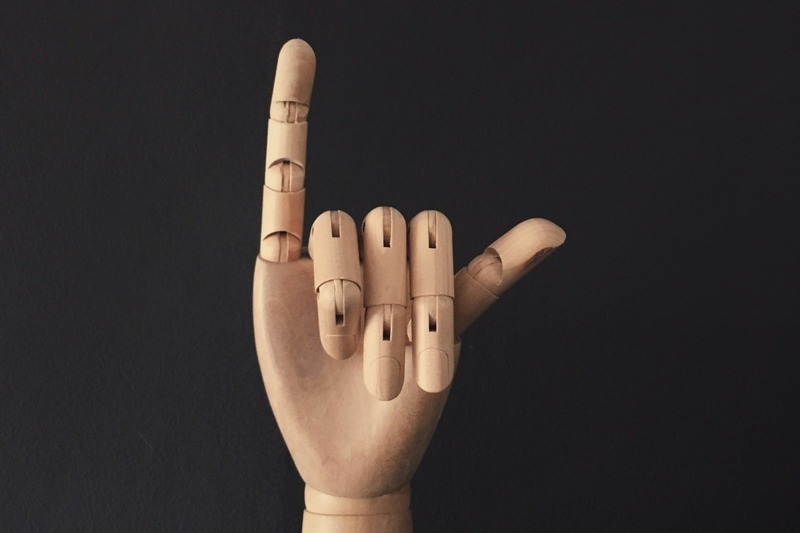
- Confirm communication signals one last time (eye contact, hand gestures).
- Take a deep breath. This is supposed to be fun.
Conclusion: Make the Set About the Audience, Not Egos
A successful B2B set is built on preparation, communication, and mutual respect. When both DJs have done their homework—talked through musical direction, shared a curated crate, practiced handoffs, and agreed on signals—the set becomes about serving the crowd together. The spotlight shifts from individual performances to a collective experience.
Trust your partner. Listen to what they’re playing. If a track doesn’t fit, adjust quickly and move on. The audience will feel that collaborative energy far more than any single perfect blend.
If you’ve got a B2B story—good or bad—drop it in the comments. Sharing those experiences helps the rest of us prepare better.