
Introduction
If you’re trying to choose between an analog and a digital synthesizer for your first hardware synth, you’ve probably run into a wall of hype, misinformation, and vague YouTube shootouts. The analog vs digital synthesizer debate is one of the most persistent in music production, and it’s easy to get stuck thinking you need to pick a side before you even know what you’re doing.
After spending time with both in a home studio over the last several years, I can tell you this: the right choice depends on your budget, your workflow, and what kind of sounds you actually want to make. Not on what some forum poster says about ‘warmth’ or ‘sterility.’
This article gives you a practical, no-nonsense breakdown of the real tradeoffs between analog and digital synths. No sales pitch. No gatekeeping. Just what you need to make an informed first purchase.
What Makes a Synth Analog?
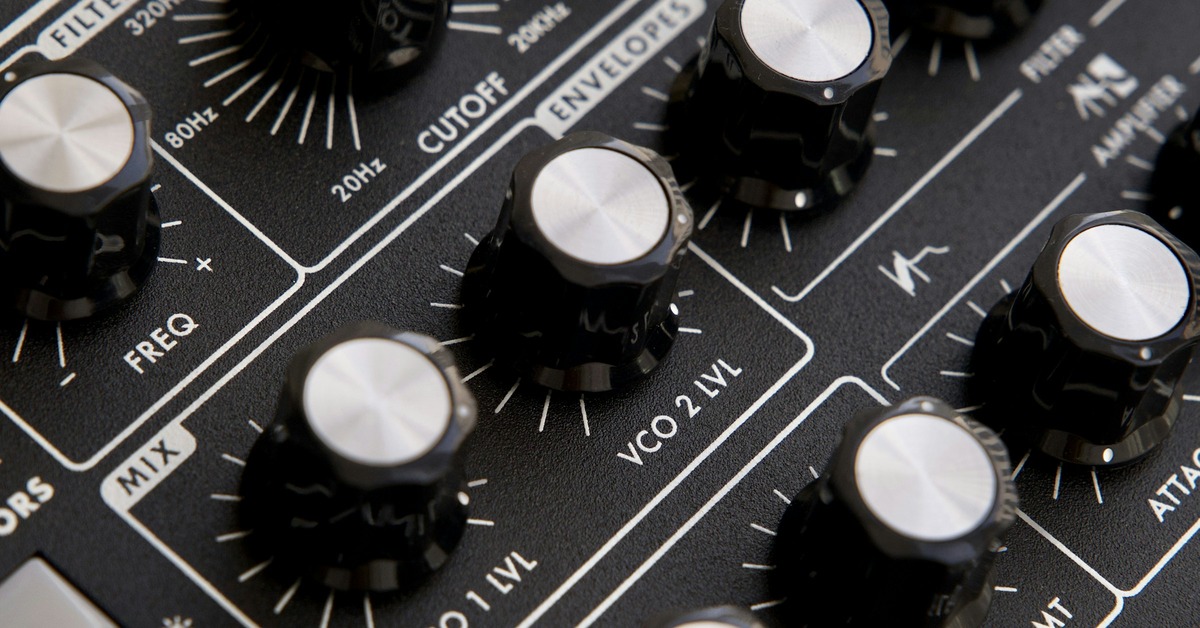
An analog synthesizer generates and shapes sound using continuous electrical voltages. Oscillators produce raw waveforms, filters shape the timbre, and envelopes control the dynamicsâall through analog circuitry. There’s no conversion to digital data at any point in the signal path.
Practically, this means subtle instability and imperfection. No two notes sound exactly alike because components have slight variations in temperature and voltage. That’s what people mean when they talk about ‘analog warmth.’ It’s not magic. It’s just controlled inconsistency.
A good example is the classic Minimoog Model D or its more affordable cousin, the Behringer Model D. Fire one up, and you’ll notice the filter resonates differently depending on how long it’s been warming up. The oscillators drift slightly in pitch. Envelopes aren’t perfectly linear. These ‘flaws’ give analog synths their character, and for bass, leads, and pads, that character can sit nicely in a mix.
There’s a tradeoff, though. Analog synths are typically monophonic or limited in polyphony. They need maintenanceâtuning drift is real, and older units require calibration. You pay a premium for that circuitry. You’re not buying features; you’re buying a specific sound and feel.
What Makes a Synth Digital?
Digital synthesizers use digital signal processing (DSP) to generate and manipulate sound. Instead of voltage-controlled components, they use math. This means oscillators can produce any waveform you can define, from classic saws to complex wavetables and FM synthesis.
The contrast with analog is significant. Digital synths offer precision, consistency, and massive polyphony for the same price as a basic analog monosynth. They can do things analog simply can’t, like sample playback, complex modulation routings, and multi-timbral operation where you play two different patches at once.
Take the Yamaha DX7 as a classic example. Modern digital synths like the ASM Hydrasynth offer wavetable synthesis, virtual analog, and deep modulation matrices in a package that costs about the same as an entry-level analog polysynth. The Korg Minilogue xd is a hybrid, combining digital oscillators with an analog filter, giving you a taste of both worlds.
The downside? Digital can sound sterile without processing. The precision that makes it reliable can also make it feel flat. High-frequency aliasing can introduce harshness if the engine isn’t well-designed. That said, modern digital synths have closed that gap noticeably, and with good effects, they compete sonically with analog in most contexts.
Sound Quality: Does Analog Really Sound Better?
Let’s kill the myth head-on. Analog does not universally sound better than digital. It sounds different, and in some contexts that difference is advantageous. But a modern digital synth like the Hydrasynth or Korg Opsix can produce sounds that are just as musical, just as rich, and often more versatile.
Here’s what I’ve found from direct A/B testing in my own setup: an analog synth like the Prophet-5 has a certain weight in the low end. The filter saturation adds harmonics that sit well with bass and leads. A digital synth like the Hydrasynth can sound cleaner, more articulate, and sometimes more cutting in a dense mix. Neither is ‘better.’ They just occupy different sonic spaces.
If you’re mixing in a bedroom studio with untreated acoustics, the difference between analog warmth and digital precision is often masked by your room anyway. I’ve recorded sequences from a Moog Grandmother and a Minilogue xd, and after EQ, compression, and reverb, telling them apart in a mix is tough even for experienced ears. The analog advantage is real but subtle, and it shrinks fast once processing is applied.
The filter is where analog really shines. Analog filters sound and behave differentlyâthey saturate, they respond dynamically, they have a ‘sweet spot’ that digital filters struggle to nail. Some digital synths emulate this well (the Hydrasynth’s filter models are excellent), but it’s not identical.
Context matters. In a live mix, analog can feel fatter. In a dense electronic production, digital can be more surgical. Don’t buy analog just because someone told you it’s superior. Buy it because you’ve listened to raw demos and prefer its character.
Workflow and Patch Memory: Analog vs Digital
This is where the practical divide gets sharp. Analog synths, especially monophonic ones, often feature knob-per-function layouts. Every parameter has a dedicated physical control. You can dial in a sound without looking at a screen. That immediacy is powerful for learning synthesis and for performing live.
The flip side is you can’t always save your patches. On a Moog Sub 37, you canâit has patch memoryâbut on a Behringer Model D or a Minimoog reissue, you’re starting from scratch each time. I’ve spent an hour dialing in the perfect bass patch on a Model D, stepped away for coffee, and come back to a different sound because the tuning drifted. It forces you to learn, but it also forces you to commit.
Digital synths are the opposite. A Korg Opsix or Yamaha Reface CS gives you hundreds of presets, and you can save your own. But navigating those parameters often means menu diving or using shift functions. You lose some tactile connection in exchange for recallability and depth.
In my experience: when I’m writing, I prefer the immediacy of analog. When I’m producing, I prefer the revisitability of digital. If you’re a beginner, patch memory is more valuable because it lets you learn without losing progress. You can build a library of sounds and come back later. Knob-per-function is great for learning, but it’s frustrating when you forget how you made that killer lead. For anyone after a first synth with hands-on control and patch memory, it’s worth browsing synthesizers with patch memory to find options that balance both.
Polyphony and Multi-Timbral Capabilities
This is a practical showstopper for many first buyers. Analog polysynths are expensive. A Prophet-6 gives you six voices for around $3,500. An OB-X8 gives you eight for around $4,500. Even the ‘budget’ analog polys like the Roland Juno-60 (now vintage) are over $2,000 used. If you want chords, pads, or any kind of harmonic playing, analog is a serious financial commitment.
Digital synths offer polyphony in spades. The Hydrasynth Deluxe gives you 16 voices for under $1,700. The Korg Minilogue xd is four voices for $500. Many digital synths are multi-timbral, meaning you can split the keyboard or layer two different sounds at once. That’s essentially two synths in one.
For a first buyer, this is a critical decision point. If you mainly want bass or lead lines, a monophonic analog synth is fine. But if you want to write chord progressions, pads, or full arrangements, digital wins decisively. I’ve seen too many beginners buy a monophonic analog synth and then immediately regret it when they can’t play a simple four-note chord.
Cost and Value: What $500 Gets You
Let’s look at real-world pricing to ground this discussion.
At $500:
- Analog options: Behringer Model D (monophonic, no patch memory), Arturia MiniBrute 2S (monophonic, semi-modular, patch memory)
- Digital options: Korg Minilogue xd (4 voice poly, hybrid analog/digital, built-in effects, patch memory), Yamaha Reface CS (8 voice poly, virtual analog, built-in effects, presets), Modal Cobalt 5S (5 voice poly, virtual analog, built-in effects, patch memory)
The digital options at this price point are simply more capable. More polyphony, more features, built-in effects, and patch memory. The analog options give you that specific character, but you’re sacrificing versatility.
At $1,000:
- Analog options: Moog Mother-32 or DFAM (both monophonic and semi-modular), used Moog Sub 25 (monophonic with patch memory)
- Digital options: Korg Prologue 8 (8 voice hybrid), used Hydrasynth Desktop (8 voice wavetable), Novation Peak (8 voice hybrid, excellent)
Here the gap narrows. The Novation Peak is a hybrid synth that gives you analog-inspired character with digital versatility. It’s a strong contender for a do-it-all first synth.
At $2,000:
- Analog options: Prophet REV2 (8 or 16 voice analog with digital control), used Prophet-6
- Digital options: Hydrasynth Deluxe (16 voice), used Waldorf Iridium
At this level, both sides are competitive. The decision comes down to sound preference and workflow.
One hidden cost for analog: maintenance. Tuning drift means you’ll spend more time calibrating, and repairs are specialized. Digital synths are typically more reliable. On the flip side, analog synths hold resale value better. A used Mother-32 will sell for close to new price. A digital synth depreciates faster. That’s worth considering if you might sell it later. For those starting on a tight budget, checking out budget synthesizers under $500 can help you see what fits.
Integration into a Modern DAW Workflow
If you’re working in a DAW like Logic, Ableton, or FL Studio, this matters a lot.
Digital synths are designed for hybrid studios. They typically have USB audio and MIDI, so you can connect them with a single cable, send and receive MIDI, and even stream audio directly without an external interface. Many also have preset editors and librarian software for managing patches from your computer. Recall is instant, and you can automate virtually every parameter.
Analog synths require an audio interface for recording. You need a cable from the synth’s output to a line input on your interface. Ground loops can introduce hum. Tuning can drift between sessions, so you might spend the first five minutes just recalibrating. In my experience using a Moog Grandmother with Logic, the workflow is: power on, wait for warmup, tune oscillators, record. It’s a ritual. Some people love that. Others find it tedious.
That said, analog character is something digital plugins still can’t fully replicate. Not because they’re bad, but because the unpredictability of analog adds a subtle life that samples or emulations don’t capture. If you’re looking for a unique voice in a production landscape dominated by plugins, an analog synth can give you that edge. But it comes at a workflow cost.
For a hybrid studio, digital wins on convenience. For a dedicated hardware setup, analog’s immediacy can be inspiring. Know which camp you’re in before you buy. A practical step to improve your recording chain is finding a reliable audio interface for synthesizers that can handle both analog and digital inputs cleanly.
Common Mistakes First Buyers Make
I’ve seen the same mistakes play out over and over in forums and with fellow producers. Here are the ones to avoid.
Mistake 1: Buying a monophonic analog synth for pads.
You cannot play chords on a monophonic synth. It plays one note at a time. If your goal is pads, drones, or chord progressions, you need at least four voices of polyphony. Don’t buy a Minibrute 2S and then wonder why you can’t play a Cmaj7.
Mistake 2: Overvaluing analog warmth in a bedroom studio.
Analog warmth is subtle, and in an untreated room, it’s often masked by room reflections, small speakers, and headphones. The difference between analog and digital in a finished mix is often negligible. Don’t pay a premium for analog warmth if your monitoring chain isn’t accurate enough to hear it.
Mistake 3: Ignoring polyphony until it’s too late.
This ties back to mistake 1. Beginners often focus on sound and overlook polyphony. Then they realize they can’t play more than one note at a time. Check the spec sheet. If you want chords, you need polyphony.
Mistake 4: Buying a synth without listening to raw demos.
Manufacturer demos are processed, compressed, and mixed with reverb. They make every synth sound good. Search for ‘raw’ or ‘no effects’ demos on YouTube to hear what the synth actually sounds like. That’s the sound you’re buying.
These mistakes are fixable, but they cost time and money. Avoid them on your first purchase.
Which Synth Should You Buy First?
Here’s a straightforward decision framework based on budget and goals.
Scenario 1: Under $500, want an all-rounder.
Go digital. The Korg Minilogue xd is the safe bet here. It’s hybrid analog/digital, four-voice polyphonic, built-in effects, patch memory, and a knob-per-function layout with a digital oscilloscope. You learn synthesis, you can save patches, and you can play chords. The Modal Cobalt 5S is also excellent for the price.
Scenario 2: $1,000+, bass and leads are your priority.
Consider analog. The Moog Sub 25 or a used Sub 37 gives you that iconic analog bass and lead sound with patch memory and hands-on workflow. The Behringer Pro-1 is a cheaper option if you’re fine with monophonic and no patch memory. These synths excel at what analog is famous for.
Scenario 3: You want the best of both worlds.
Buy a hybrid synth. The Novation Peak is a strong contender at $1,500. It’s 8-voice polyphonic, has analog filters, digital oscillators with wavetable capability, built-in effects, and deep modulation. The Korg Minilogue xd at $500 is the same concept at a lower price. Hybrid synths give you digital versatility with analog filter character.
Here’s a first synth checklist:
- Polyphony: Minimum four voices unless you only want leads/bass
- Hands-on controls: Knobs and sliders, not just menu-diving
- Patch memory: Saves time and lets you revisit sounds
- Built-in effects: Reverb, delay, chorusâessential for standalone use
If I had to recommend one synth for a complete beginner right now, it would be the Korg Minilogue xd. It hits all the checklist items, sounds great, and is affordable enough that you won’t regret it even if you upgrade later. It’s a safe bet that teaches you synthesis fundamentals while giving you real-world usability.
Final Thoughts
Neither analog nor digital is inherently better. The best choice is the one that fits your workflow, budget, and sound goals. If you’re just starting out, don’t get caught up in the hype. Prioritize polyphony, hands-on control, patch recall, and built-in effects over analog vs digital dogma. Learn the fundamentals on a capable synth, and you’ll be able to make informed decisions about your next purchase.
At Ramesh Music, we recommend starting with a versatile digital or hybrid synth to learn the fundamentals before committing to a more specialized setup. That approach minimizes frustration and maximizes what you get out of your first synth.
If you’re ready to buy, exploring first synthesizers for beginners can give you a good look at what’s currently available. No filler, just the gear we’d actually buy ourselves.